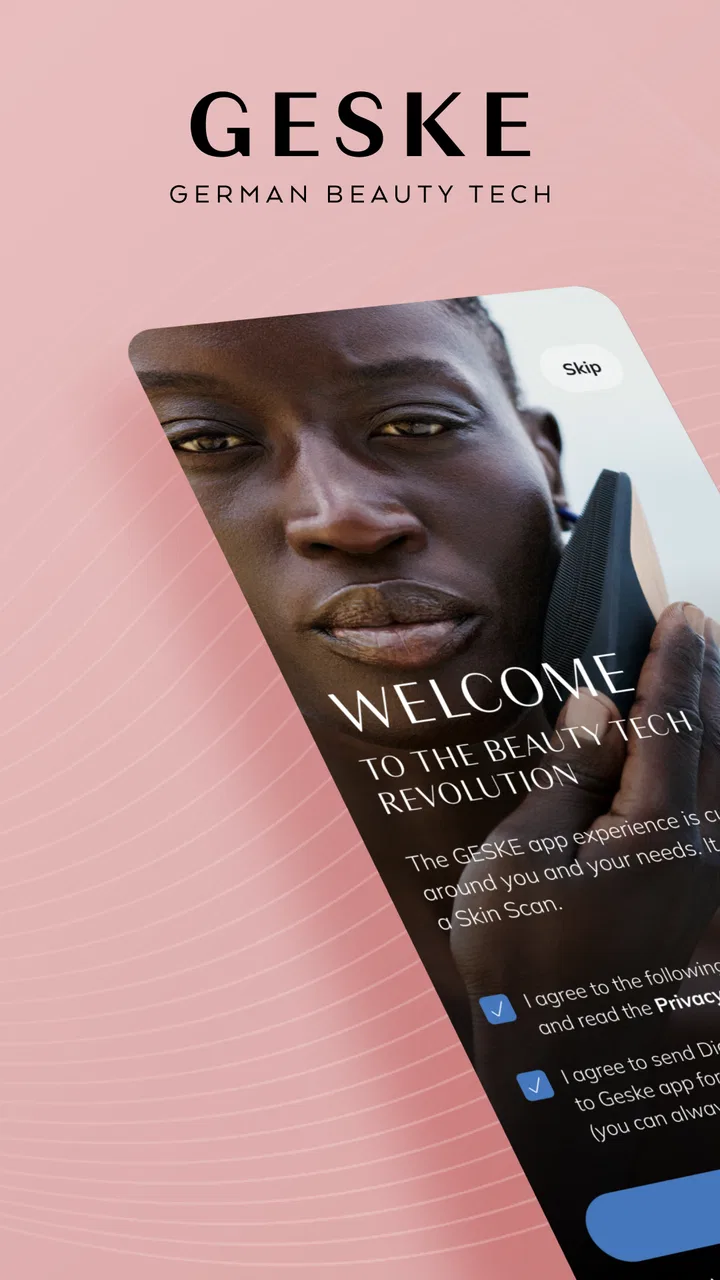
GESKE: German Beauty Tech
- 4.5
- Rating
- 10.00K
- Installs
- Free
- Price

 Analysis by App-foxy
I approached GESKE: German Beauty Tech as a practical skincare companion rather than a replacement for professional advice. It is a free beauty app from GESKE Beauty Tech Inc., built around an AI-powered skincare routine and connected to the brand’s beauty-tech approach. My first impression was that it makes more sense when used consistently with a personal routine than when opened once for a quick product suggestion.
That distinction matters in a household. Skincare apps often look easy to share because everyone can hold the same phone, but recommendations are personal. Skin type, existing products, sensitivity, age, and daily habits can differ widely between two people using one device. I found the app most useful when I treated each person’s routine as separate, even if the phone itself was shared.
How GESKE fits into a shared household routine
A realistic example is a couple sharing a bathroom and occasionally using the same smartphone. One person may want a short morning routine before work, while the other is more interested in evening care or device-assisted steps. The app can serve as a coordination point, but I would not treat a shared phone as proof that the app is designed for multiple profiles. The safer habit is to keep each person’s skincare information conceptually separate and avoid making decisions for someone else based on a routine prepared for your own skin.
You May Also Like

 Blood Strike: 2.5 Anniversary
Blood Strike’s Loadouts Turn Every Drop Into a Tactical Gamble
A close look at Blood Strike’s custom loadouts: how fast access to signature weapons reshapes its battle royale rhythm, rewards preparation, and narrows the gap between fights.

 Pandora - Music & Podcasts
Pandora’s Music Is Easy to Start, but Harder to Recover
Pandora’s strength is its low-effort path from a seed to a station. Its weak spot is how much confidence it asks you to place in connection, setup, and quiet recovery.

 8 Ball Pool
 Is Built on Rivalries, Rematches, and Routine
A close look at the rivalries, rematches, shared routines, and unanswered safety questions that turn a quick pool match into a persistent mobile community.

 Samsung Music
’s Quiet Strength Is Playing What You Already Own
Its reach comes less from spectacle than from dependable access to a personal library. That simplicity is both the app’s strongest retention engine and its ceiling.

 AccuWeather: Weather Radar
AccuWeather Review: A Quick, Clear Forecast for Everyday Decisions
For everyday plans, the best forecast is the one you can understand quickly. AccuWeather makes rain timing, radar, and local conditions easy to act on, with a few trade-offs.

 Hill Climb Racing
Why Hill Climb Racing Still Turns Crashes Into One More Run
A tiny car, a bumpy hill and one more upgrade: Hill Climb Racing keeps resurfacing because its simple chaos makes every near-miss feel personal.
More From Our News Desk



This is especially important if one household member has reactive skin. A routine that feels comfortable for one person may be unsuitable for another, even when both people are interested in the same beauty device or product family. I would use the app to organize and understand the suggested process, then discuss any significant change with the person who will actually follow it.
The app’s strongest household value is therefore coordination, not shared personalization. It can help remind someone which part of a routine they intended to follow, provide a common reference when comparing steps, and make a beauty-tech device feel less mysterious. It is less convincing as a communal account where everyone freely edits the same profile.
One useful approach is to decide in advance who owns the routine on the device. If it is my phone and my account, I keep the app focused on my skin and let another person browse only when I am present. If a family member wants their own recommendations, I would prefer that they use their own device and account where possible. That simple boundary prevents accidental mixing of preferences and avoids the awkward question of whether a recommendation was meant for one person or another.
What setup feels sensible before the first routine
I would begin by installing the app on the device of the person who will use it most often. The app is available as a free download, which lowers the barrier to trying it without turning the first session into a purchase decision. I would then have the actual user explore the routine experience personally rather than answering every question on their behalf.
That hands-on setup is not just a privacy habit. Skincare recommendations depend on personal observations, and another household member may describe skin concerns differently. If I answer quickly for someone else, I risk creating a routine that sounds plausible but does not reflect how their skin behaves. The better workflow is to let the user make the choices, read the guidance, and decide what feels realistic.
I also recommend keeping the first session deliberately modest. Instead of immediately changing every product and habit, I would note the suggested sequence, identify which steps are already familiar, and introduce only one unfamiliar element at a time. This makes it easier to notice irritation, confusion, or simple non-compliance with the routine. It also avoids blaming the app when the real issue is that too many changes were introduced together.
Another practical boundary is the phone itself. A shared device may show notifications, recent activity, or saved information to the next person who opens it. I would not leave the app open in a bathroom or communal space if the user considers their skincare concerns personal. This is ordinary device hygiene rather than a special feature claim, but it makes a difference in a family setting.
The app runs on devices meeting its minimum operating-system requirement of Android or iOS version 9. That makes it approachable for people who do not use the newest phone, although the experience can still depend on the device’s camera, screen, battery, and general performance. I would check that the phone is comfortable to use near a mirror and that the person following the routine can read the instructions without rushing.
For a shared household, I would also agree on a simple verbal rule: the person whose skin is being assessed makes the final decision. A partner, parent, or teenager can help navigate the app, but they should not pressure another user to follow a recommendation. That keeps the technology in its proper role as guidance rather than authority.
Coordinating routines without confusing people
Coordination becomes useful when it reduces friction. For example, two people might use the bathroom at different times and want to avoid leaving a beauty device uncharged or forgetting where it belongs. The app can be part of the routine conversation, but I would still keep the physical products and devices clearly separated. A small amount of labeling or a dedicated storage spot can prevent a shared routine from becoming a shared-product mistake.
I found that the best coordination method is not asking, “What did the app tell you to do?” It is asking, “Which steps are you comfortable doing today?” That wording leaves room for skin changes, time pressure, and personal preference. AI guidance can organize a plan, but it cannot see every factor that affects whether a routine is sensible on a particular morning.
For a busy weekday, I would use the app as a preparation tool rather than staring at the screen during every step. I can review the sequence first, put the relevant items nearby, and then focus on carrying it out. This is more practical in a shared bathroom and reduces the chance that someone else interrupts the routine or picks up the wrong product.
For an evening routine, coordination can work differently. One person may use the app while the other is already in the bathroom, so it helps to keep the phone clean, dry, and out of the way. I would not place it beside a sink where splashes can damage it. The app may be about beauty, but the phone still needs ordinary protection from water and cosmetics.
A less obvious benefit is that shared discussion can expose unrealistic routines. If a suggested sequence takes longer than a person can manage before work, they may abandon it entirely. Talking through the routine with a household member can reveal whether the plan fits real life. In my experience, a shorter routine followed consistently is more useful than an elaborate one that only happens on weekends.
There is also a trade-off between convenience and independence. A shared phone makes it easy to help someone who is new to skincare, but it can encourage one person to become the household “routine manager.” I would avoid that arrangement. Each user should understand their own steps well enough to continue without another person supervising them.
Age, trust, and sensible expectations
The app carries an Everyone content rating, so its presentation is intended to be broadly accessible. That does not mean every recommendation is automatically appropriate for every child or teenager. Younger users may need an adult to help distinguish general skincare guidance from treatment for a medical concern, and they may also need help understanding how to use a beauty device responsibly.
I would be comfortable introducing it to a teenager as a learning aid, provided the conversation stays grounded. The app can help explain a routine and encourage consistency, but it should not become a source of pressure about appearance. An adult should make clear that following a routine is optional, that discomfort is a reason to stop, and that persistent skin problems deserve qualified medical attention rather than endless experimentation.
Trust also matters for adults sharing a device. A partner may be happy to compare routines, while another person may consider skin concerns private. I would not open someone else’s account, change their routine, or interpret their results without permission. The app should support personal care, not create a new way for household members to monitor one another.
Parents should be especially careful not to turn the app into a compliance tool. There is a difference between helping a young person remember a gentle routine and demanding that they follow an AI suggestion exactly. The first builds useful habits; the second can make beauty care feel judgmental. The technology is more trustworthy when the user remains able to question it.
I also would not use the app to diagnose a rash, infection, severe acne, or a sudden reaction. Its beauty focus makes it suitable for routine organization and product-oriented exploration, not for replacing a clinician. If a household member has a known condition, allergy, or treatment plan, the app should fit around professional guidance rather than override it.
That limitation is not a criticism unique to this product. It is a basic boundary for AI-assisted beauty tools. The more personal the concern, the more important it becomes to treat the app’s suggestions as a starting point. I appreciate the convenience, but I would never let a polished interface make a health decision on behalf of someone in my home.
Where it stands beside ordinary skincare alternatives
The usual alternative is a notes app, a printed routine, or advice from a beauty professional. A notes app is more flexible and easier to customize, but it does not offer the same beauty-tech context. A printed routine is dependable and private, yet it becomes outdated when products or habits change. Professional advice is more appropriate for complex concerns, although it may be less convenient for everyday organization.
GESKE’s app occupies the middle ground. Its AI-powered approach is more guided than a blank checklist, while its beauty focus is more practical for daily care than a general health tracker. I like that position for someone who wants structure but does not want to build a routine from scratch. I am less convinced for a user who already has a simple, effective plan and does not want another screen involved.
Compared with a generic beauty journal, the app feels more connected to the GESKE ecosystem and its device-oriented way of thinking. That can be a strength if I already use compatible beauty technology or want guidance that relates to that style of care. It can be a limitation if I want completely brand-neutral advice or prefer to mix products from many unrelated sources without any particular ecosystem.
The app is not a substitute for ingredient research either. I would still check labels, consider known sensitivities, and introduce new products gradually. An AI routine can make the order of steps easier to understand, but it does not remove the need to know what I am applying. This is one of the most important trade-offs: convenience improves, while personal responsibility remains.
Its public reception is encouraging, with an average rating of 4.5 from around ninety ratings and more than five written reviews. I read that as a positive early signal rather than definitive proof that it will suit every skin type or household. The app has passed the initial discovery stage, but a relatively small review base means I would still judge it by my own routine and comfort.
Who will get the most from it
I would recommend trying it to someone who owns or is considering GESKE beauty technology, wants a guided routine, and tends to lose track of skincare steps. It is also a reasonable choice for a beginner who prefers visual or structured help over searching through scattered beauty advice. The free price makes experimentation less risky, especially when the goal is to understand the app before committing to a longer routine.
It can also help a household member who is supportive but not knowledgeable. Instead of relying on a partner to remember every step, the user can explore the routine directly and retain ownership of the process. That reduces dependence on the most enthusiastic skincare person in the home.
I would skip it if I want a completely manual system, dislike AI-guided suggestions, or need clinical assessment. I would also hesitate if the main goal is to share one profile among several people. The app may be usable on a shared device, but personal skincare information should not be casually merged simply because the phone is communal.
Another reason to skip it is routine fatigue. If I already have products that work, know the order, and do not want device-related guidance, the extra app may add more administration than value. In that case, a short note or a familiar professional recommendation could be better. The best beauty app is not the one with the most guidance; it is the one that helps me follow an appropriate routine without making care feel complicated.
My household verdict after using the app
GESKE Beauty Tech is most convincing as a personal guide that happens to work in a shared home, not as a family skincare dashboard. I like its focused beauty purpose, its AI-assisted structure, and the way it can turn an unfamiliar routine into something easier to approach. The free entry point and Everyone rating make it approachable, while the developer’s beauty-tech identity gives the experience a clear direction.
My main advice is to protect the boundaries around the routine. Let the actual user provide the information, keep profiles and devices conceptually separate, avoid treating suggestions as medical instructions, and introduce changes gradually. Those habits make the app more useful and reduce the risk of confusing convenience with certainty.
The current version is 2.4.5, and the app has reached over ten thousand installs, so it has a real user base without feeling like an unavoidable mainstream platform. I would describe it as a focused companion for people curious about guided skincare rather than an essential tool for everyone.
In the end, I would recommend it to a friend who wants help organizing beauty-tech routines and is willing to stay involved in the decisions. I would not recommend handing it to a child without context, sharing one personal routine blindly across a household, or relying on it for a skin problem that needs professional attention. Used with those limits, the most valuable feature is not automation but clearer, more consistent decision-making.
For me, that makes GESKE: German Beauty Tech worth trying when the aim is to build a manageable personal routine. It is a useful starting point, a convenient coordination aid, and a thoughtful companion for everyday skincare, as long as the person using it remains the final judge of what belongs on their own skin.
FAQs for GESKE: German Beauty Tech
01What features does GESKE: German Beauty Tech offer?
GESKE: German Beauty Tech offers a range of personalized skincare solutions, leveraging advanced AI technology to analyze your skin condition. The app provides tailored recommendations, beauty routines, and access to a variety of German-engineered beauty devices. Users can track skin progress and receive updates on the latest skincare trends.
02Is GESKE suitable for all skin types?
Yes, GESKE is designed to cater to all skin types. The app's AI-driven analysis provides personalized recommendations based on your unique skin characteristics. Whether you have oily, dry, combination, or sensitive skin, GESKE adapts its advice and product suggestions to suit your specific needs.
03How user-friendly is the GESKE app?
GESKE is designed with user-friendliness in mind. Its intuitive interface guides users through each step, from initial skin assessment to personalized routine creation. The app ensures a seamless experience, making it accessible for both tech-savvy users and those less familiar with technology.
04Does GESKE require any additional hardware?
While the app itself does not require additional hardware, it is compatible with a variety of GESKE beauty devices. These devices enhance the app’s effectiveness by providing real-time feedback and improving skincare routines. However, users can still benefit from the app without owning these devices.
05Is there a subscription fee for GESKE?
GESKE offers both free and premium subscription options. The free version provides basic features, while the premium subscription unlocks advanced tools, personalized insights, and exclusive content. Users can choose the plan that best fits their skincare needs and budget, ensuring flexibility and value.
Pros
- Intuitive and user-friendly interface.
- High-quality tutorials for device use.
- Wide range of beauty tech options.
- Regular updates with new features.
- Easy integration with other beauty apps.
Cons
- Limited language options available.
- Requires stable internet connection.
- Subscription needed for full access.
- Occasional bugs in device syncing.
- No offline mode for tutorials.

GESKE: German Beauty Tech
Gallery